

Will Interest Rates Rise Again in Australia? What Homeowners and Buyers Should Know
If you’re a homeowner or planning to buy property in Australia, you may be wondering where interest rates are heading next.
After three increases earlier in 2026, the Reserve Bank of Australia (RBA) left the cash rate unchanged at 4.35% in August. However, the story isn’t necessarily over. Inflation remains higher than the RBA would like, and the Bank has made it clear that another increase remains possible if inflationary pressures become stronger.
So, will interest rates rise again?
The honest answer is that nobody can say for certain. What we can do is look at what is influencing the RBA’s decisions and what homeowners and buyers can do now to prepare.
What Is Happening With Interest Rates in Australia?
The RBA has already increased the cash rate three times in 2026, taking it to 4.35%. At its August meeting, the Board decided to leave the rate unchanged while assessing how the economy responds to those earlier increases.
That doesn’t mean future interest rates are guaranteed to stay where they are.
The RBA says inflation is still too high and expects it to remain elevated for some time. It also says there are upside risks to the inflation outlook and that it will act if necessary.
The next scheduled RBA decision is on 29 September 2026, so borrowers and prospective buyers will be watching the economic data closely.
Why Could Interest Rates Rise Again?
The biggest factor is inflation.
The RBA uses interest rates as one of its main tools for influencing spending and demand. When borrowing becomes more expensive, households and businesses generally have less money available to spend, which can help ease price pressures.
At the moment, inflation is still above the level the RBA wants to see. The Bank has also highlighted ongoing cost pressures, including higher energy and commodity prices linked to the Middle East conflict.
If inflation proves more persistent than expected, the RBA could decide that another interest rate rise is necessary.
However, that is not a prediction that rates will definitely increase.
The RBA’s August outlook also noted that market participants were pricing in around half of a rate increase by the end of 2026, while most economists surveyed by RBA staff expected rates to remain unchanged over the following year.

What Does This Mean for Homeowners?
For homeowners with a variable-rate mortgage, changes in the cash rate can eventually flow through to borrowing costs.
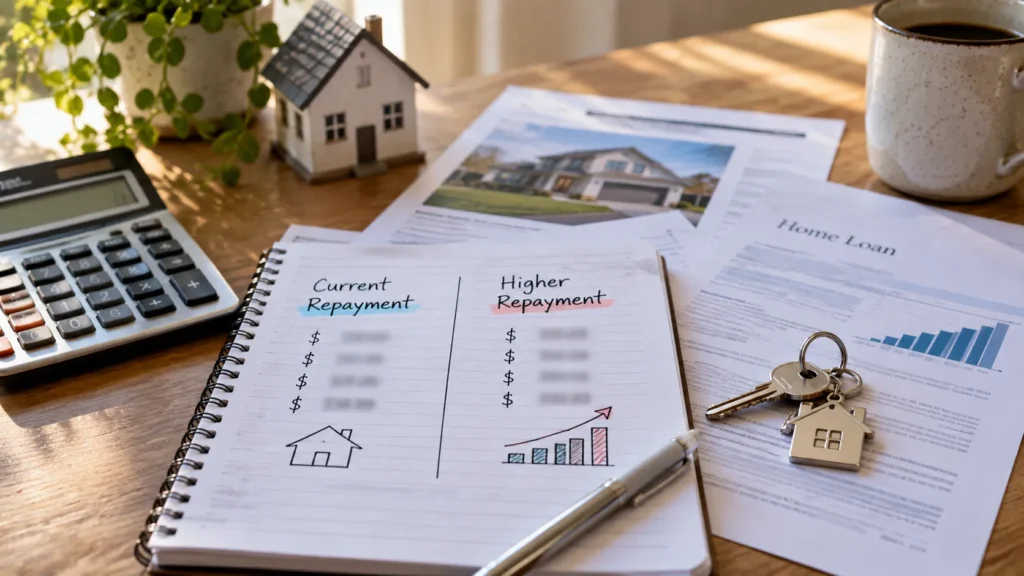
If home loan interest rates increase, your repayments could also increase depending on how your lender passes the change through to your loan.
For example, a household that is already managing a tight monthly budget may feel even a relatively small rate increase.
This is why it’s worth reviewing your mortgage before you’re under pressure.
Look at:
- Your current interest rate
- Remaining loan balance
- Current monthly repayments
- Remaining loan term
- Available offset or redraw features
- Fees charged by your lender
- Other debts you’re currently repaying
You may discover that your current loan is still competitive. Or you may find that it’s worth investigating alternatives.
Should Homeowners Refinance?
If your current loan no longer suits your circumstances, you may want to refinance.
However, refinancing isn’t automatically the right answer just because another lender advertises a lower rate.
When comparing loans, look beyond the headline rate and consider:
- Interest rate
- Comparison rate
- Application and switching costs
- Ongoing fees
- Loan features
- Repayment flexibility
- Total interest over the remaining term
If you are considering whether to refinance home loan arrangements, compare the potential savings with the costs involved in switching.
A broker can help you compare available lenders and determine whether refinancing is likely to make sense for your circumstances.
What About People Planning to Buy a Home?
Potential buyers often worry about purchasing when interest rates are uncertain.
It’s understandable. Nobody wants to buy a property only to find that their repayments become uncomfortable after a future rate increase.
But waiting indefinitely for rates to fall isn’t necessarily the answer either.
Property prices, borrowing capacity, employment, savings, and your personal financial position all matter. Trying to perfectly time the market can be difficult.
Instead, focus on whether you can comfortably manage the loan under different scenarios.
Ask yourself:
- Can I afford the repayments if rates increase?
- Do I have an emergency savings buffer?
- How much deposit can I contribute?
- What other debts do I have?
- Will the loan still fit my budget if household expenses increase?
A conservative approach can give you more breathing room.
What About People Planning to Buy a Home?
Changes in mortgage rates can influence how much a lender is willing to lend.
When borrowing costs increase, repayments become more expensive, which can affect a borrower’s assessed capacity to service a loan.
This is particularly important for first-home buyers who may already be working with a tight budget.
Rather than focusing only on the maximum amount a lender may approve, consider what repayment level you can realistically maintain.
The goal shouldn’t be to borrow as much as possible. It should be to borrow an amount that fits comfortably within your financial situation.
What Should Homeowners Do If Rates Rise Again?
If another interest rate rise occurs, you don’t necessarily need to panic.
Start by reviewing your budget and understanding how the change could affect your repayments.
You may be able to:
- Reduce unnecessary household expenses.
- Review your existing loan rate.
- Ask your lender whether a better rate is available.
- Compare other loan options.
- Consider making additional repayments if your circumstances allow.
- Speak with a mortgage broker before making a major change.
Taking action early gives you more options than waiting until repayments become difficult to manage.
What Should Buyers Do Right Now?
If you’re planning to buy, uncertainty around interest rates doesn’t mean you need to put your plans on hold.
Instead, prepare carefully.
Start by understanding your borrowing capacity and establish a realistic property budget. Then consider how your repayments would look if rates moved higher.
It can also be useful to get pre-approval before seriously shopping for a property. This can give you a clearer idea of your borrowing position and help you avoid looking at homes outside your comfortable budget.
Remember that pre-approval isn’t a guarantee of final approval, and your circumstances can change.
Are Mortgage Rates Going to Fall Soon?
It’s tempting to look for a simple answer, but the direction of mortgage rates depends on what happens with inflation, employment, household spending, global events and the broader Australian economy.
The RBA’s August projections assume that financial conditions will remain restrictive for some time. The Bank expects inflation to gradually ease, but its latest outlook says inflation is not expected to return to the midpoint of the 2–3% target range until early 2028.
That means borrowers shouldn’t build their financial plans around an immediate return to much lower rates.
Instead, it’s sensible to make decisions based on what you can comfortably manage today.
How Winning Wealth Finance Can Help
Keeping track of interest rates, lender policies and mortgage products can be difficult when you’re also managing work, family and everyday expenses.
Winning Wealth Finance can help you compare suitable home loan options and understand how different loan structures could fit your circumstances.
Whether you’re buying your first home, refinancing an existing mortgage or simply reviewing your current loan, getting professional guidance can make the process easier.

Frequently Asked Questions
It's possible, but there is no certainty. The RBA has kept the cash rate at 4.35% while it assesses the economy, but it has said it could increase rates again if inflationary risks materialise.
If you have a variable-rate loan, an RBA increase may eventually lead to higher repayments if your lender passes the increase through to your loan.
Not necessarily. If you're considering a refinance home loan strategy, compare your current loan with available alternatives and factor in all switching costs
The RBA expects financial conditions to remain restrictive while inflation gradually comes down. The outlook can change as economic conditions develop.
There's no universal answer. If you're financially ready to buy and can comfortably manage repayments under a range of interest rate scenarios, waiting solely for a rate cut may not necessarily be the best strategy.